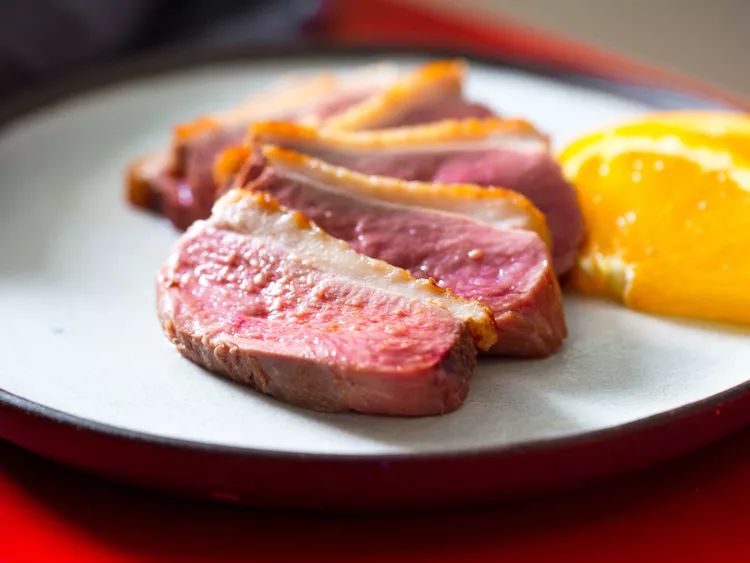
Pan-Roasted Duck Breast with Orange Sauce
Turns out cooking duck breast is easy if you know the know! Because the duck starts in a cold pan, it'll be a silent start, but you'll know you've hit the right pan temperature if, after about five minutes, you hear quiet bubbles of fat gently gurgling away - babbling-brook bubbles, more activity than a stagnant pond but far short of spraying waterfalls. Save the rendered fat for some of the best roast potatoes you'll ever eat.
Ingredients
- 4 duck breasts, 4 to 5 ounces (112 to 140 g) each
- Kosher salt
- 1/2 cup dry white wine (4 fluid ounces; 120 ml)
- 1 1/2 cups homemade chicken stock, or store-bought stock combined with 1 tablespoon powdered gelatin (12 fluid ounces; 360 ml)
- 4 tablespoons unsalted butter (2 ounces; 60 g)
- 1 teaspoon freshly grated orange zest
- 1/4 cup (60 ml) freshly squeezed orange juice from 1 orange
- 1/2 teaspoon freshly ground black pepper (or to taste)
Directions
- With a sharp knife, gently score the duck breast skin in a tight crosshatch pattern, keeping the scores 1/8 inch apart. If you prefer a little fat left on the breasts after cooking, just barely score the skin; to render more fat, score more deeply, taking care not to expose the flesh.
- Season duck breasts with salt, heavily on the skin side and lightly on the flesh side.
- Place duck breasts, skin side down, in a large, cold sauté pan. Place pan over low to medium-low heat. To keep the edges from curling up, press duck breasts down with the help of a smaller sauté pan or cooking weight. After about 5 minutes, the fat should begin to gently bubble. If the fat is either silent or spitting, adjust heat accordingly. Maintain the gentle bubble of fat, pouring out excess rendered fat throughout the cooking process, until much of the fat has rendered, skin is golden brown, and the duck’s internal temperature is 125°F (52°C), about 15 minutes.
- Increase heat to medium and further brown skin if needed, about 1 minute, before flipping and cooking on the flesh side. For medium-rare meat, cook until breast registers 130°F (54°C) on an instant-read thermometer, about 1 to 2 minutes. Continue cooking until duck registers 140°F (60°C) for medium or 155°F (68°C) for well-done. Remove duck from pan and set aside to rest.
- For the pan sauce: Over high heat, deglaze the sauté pan with the white wine. Scrape up any brown bits stuck to the pan and let the wine reduce until the pan is almost dry and only 1 to 2 tablespoons remain, about 2 minutes. Add chicken stock and let reduce by half, until sauce is sticky and rich, about 2 minutes. Remove sauce from heat and swirl in butter until melted and evenly incorporated. Season sauce with orange zest and juice, salt, and black pepper. Serve with duck breast.
Notes
- Nonstick pans can transfer more heat than cast iron - if even the lowest setting is too hot, try a smaller burner or a cast iron pan.
Source: Serious Eats